

Ask any educator what their students need most, and you’ll hear words like focus, confidence, and connection.
The right learning environment can help all three.
Every day, educators across all levels are focused on helping students grow—not just academically, but socially and emotionally. To do this successfully, they need environments that encourage measurable gains in attendance, engagement, and well-being.
When design fosters comfort and connection, students and teachers have a stronger foundation for success.
Designing for the Whole Student: What it Means
Supporting the whole student means creating an educational experience that develops skills beyond math and reading.
While academics are important, so is their ability to navigate challenges and relationships. And it’s not one or the other. Students proficient in these areas tend to have an easier time learning academic subjects as well.
While teachers and educators play a huge role in this holistic development, they need the support of classrooms and educational spaces designed with these goals in mind.
The right environment can help students:
- Build relationships and empathy
- Regulate energy and attention
- Feel seen, capable, and safe
At Gilbert Architects, our approach draws on evidence-based principles from organizations like the Association for Learning Environments (A4LE). Rod Frey Jr., our A4LE-certified principal, helps ensure every project is aligned with the latest research on how space impacts student engagement and well-being.
“When a space is designed well, it removes barriers. Students can focus, collaborate, and feel comfortable enough to learn. The room does a lot of the quiet work that makes teaching easier,” Rod shares.
Spaces that Encourage Connection
Students engage more deeply when they feel connected to each other, their teachers, and their surroundings. Good design makes those connections easier and more frequent.
Larger-scale design strategies that support this can include:
- Commons and collaboration zones that create casual gathering spaces for students
- Learning areas that offer a variety of settings for individual, small-group, or whole-class work
- Transparent circulation paths and interior views that keep activity visible and the school feeling open
- Outdoor learning or courtyard spaces that extend connection beyond the classroom
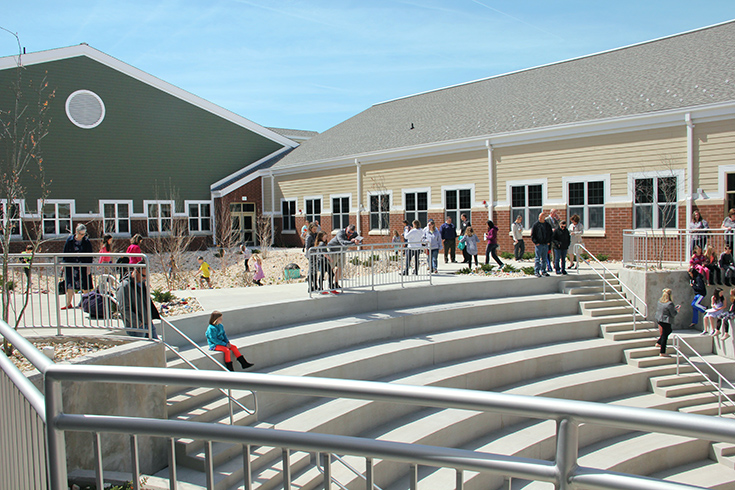
That said, schools don’t need a major renovation to create environments that enrich student connection.
Small, low-cost shifts that build connection include:
- Widened corridors with flexible seating that double as informal learning zones
- Alcoves or underused corners that become calm, collaborative spots
- Movable furniture that allows quick transitions to small-group work
- Interior windows that improve visibility and make spaces feel open
Before jumping into layout changes, it helps to ground early planning conversations in how students actually use the space. Simple questions can reveal opportunities already hiding in the existing footprint.
A helpful place to start is by asking:
- Where can students comfortably collaborate without disrupting others?
- Where do students naturally gather between classes?
- Which circulation areas feel congested or underutilized?
- Are there spaces where teachers wish they had more flexibility?
When connection is built into the environment, it becomes part of the culture. Students feel ownership of their space, and by extension, their community.
Spaces that Support Calm
Learning requires focus, and focus thrives in calm, balanced environments. Schools are busy places, but design can bring clarity and quiet into daily routines.
Design strategies that support a calming environment include:
- Natural daylight and outdoor views that lower stress and boost attention
- Acoustic control through ceiling tiles, flooring, and wall treatments that reduce fatigue
- Clear sightlines that help students and staff move confidently through space
- Balanced color palettes and textures that support focus without overstimulation

Integrating these practices doesn’t require a full building overhaul.
A helpful starting point is identifying where daylight access or acoustic improvements could have the biggest impact.
Even small changes, like replacing hard flooring, can make a noticeable difference in noise levels and overall comfort. Throughout a busy school day, thoughtful design can create small pauses that help students and staff reset and refocus.
Spaces that Build Confidence
Confidence grows when students see themselves reflected in their environment. Inclusive design ensures that every student, regardless of background or ability, can participate fully and comfortably.
Design strategies that help build confidence include:
- Displaying student work in public areas to celebrate creativity and achievement.
- Providing choice in how and where students learn, such as standing desks, soft seating, and outdoor areas
- Incorporating universal design elements to ensure access, dignity, and independence for everyone
- Creating visibility between learning spaces so students feel part of something larger
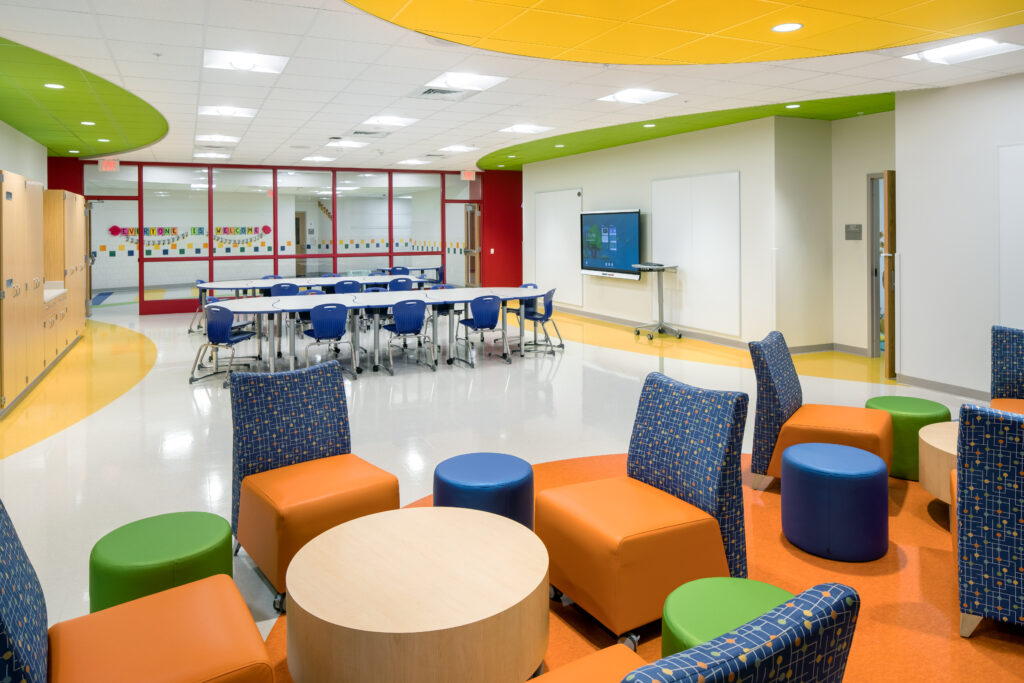
But you don’t need yo make major renovations to begin designing for confidence.
When reviewing plans or evaluating existing spaces, start by asking:
- Does this space celebrate every learner?
- Can every student access and use this room comfortably and independently?
- Are there areas where students can take ownership of their environment?
Inclusive design sends a message of belonging that shapes confidence, pride, and a deeper sense of connection to school.
Why This Approach Matters
Schools are more than collections of classrooms. They’re environments that shape how students feel, behave, and engage every day. Designing for the whole student acknowledges that learning doesn’t happen in isolation — it grows from connection, clarity, comfort, and belonging.
When these values guide planning, the result is a building that works for students and educators alike. Spaces become easier to maintain and adapt. Daily routines run more smoothly. Teachers feel supported. Students feel grounded and confident. And families see those values reflected in the environment their children experience.
A school designed with intention strengthens its entire community. It supports well-being, fosters growth, and creates a foundation where every learner can thrive.
Bringing it Together
A well-designed school is more than a building. It’s a daily experience that supports learning, strengthens culture, and helps students feel capable and connected.
At Gilbert Architects, we design with the whole student in mind — creating environments that make learning easier, calm more accessible, and confidence part of the everyday routine.
See how this approach takes shape across our projects.
