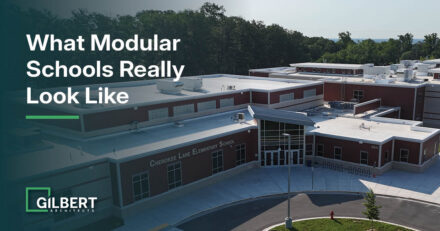
You wouldn’t build a plane on the tarmac.
Not because it cannot be done, but because too many variables start working against the process. Weather delays. Site congestion. Coordination challenges. Schedule pressure.
School construction deals with many of those same conditions.
Most districts are building around active classrooms, bus loops, testing schedules, athletic programs, and aging infrastructure, all while trying to maintain daily operations. At the same time, projects are expected to move faster and with less disruption than they did even a decade ago.
That pressure is one reason more districts are taking a closer look at off-site construction.
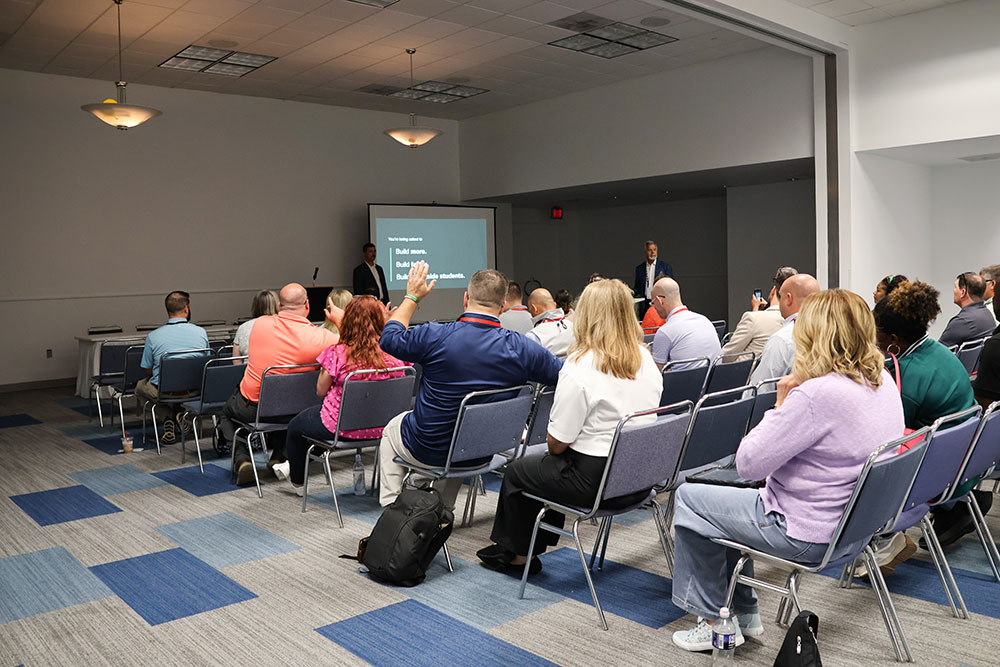
During a recent discussion at the 2026 MDASBO Spring Conference, Gilbert Architects and MODLOGIQ explored how off-site approaches are helping some districts reduce disruption, improve schedule predictability, and rethink how projects are delivered on occupied campuses.
The conversation kept coming back to the same challenges: tighter schedules, labor constraints, occupied sites, and the growing pressure to deliver projects with fewer surprises.
What changes with off-site construction
Off-site construction shifts a significant portion of the building process into a controlled manufacturing environment rather than completing everything on campus.
While foundations and utilities are installed at the school, building components are fabricated off site at the same time. In many projects, classrooms arrive on site already framed, wired, and substantially finished.
That overlap changes the timeline.
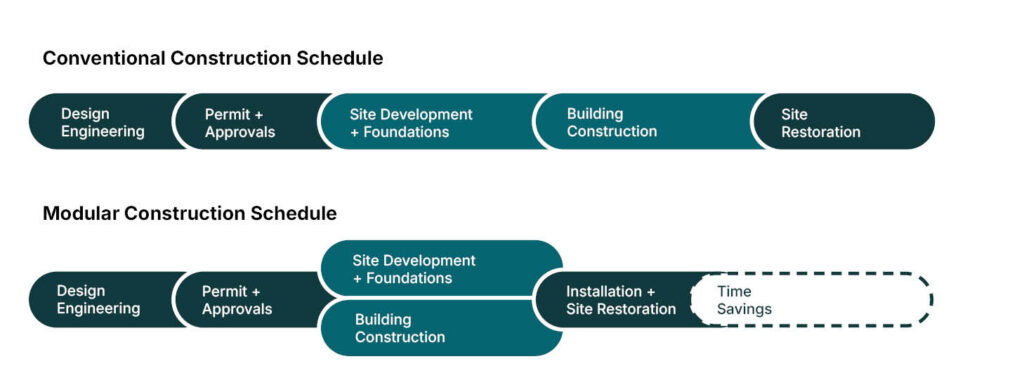
Traditional construction is largely sequential—one phase finishes before the next begins. Off-site construction allows portions of the project to move forward simultaneously, which can shorten the overall schedule and reduce the duration of active construction.
For districts working within occupied schools, that matters.
In many cases, there are fewer deliveries, fewer workers moving through active campuses, and less need for long-term material staging.
Occupied campuses change the equation
Construction on an active school campus creates a different set of pressures than a greenfield project.
A delay impacts more than the construction team. It could require classroom relocations, transportation pattern alterations, security planning, and changes to daily routines.
Facilities teams know how quickly a manageable project can become a complicated one once schedules tighten or unexpected conditions start affecting operations.
That is part of why predictability matters so much in K-12 construction.
Off-site construction does not eliminate risk, but it can reduce some of the conditions that commonly create schedule instability. Much of the work happens indoors in a controlled environment where weather exposure, trade overlap, and site coordination are easier to manage.
The process also allows fabrication and site work to happen concurrently instead of waiting for one phase to fully finish before another begins.
The perception problem
One challenge off-site construction still faces is perception.
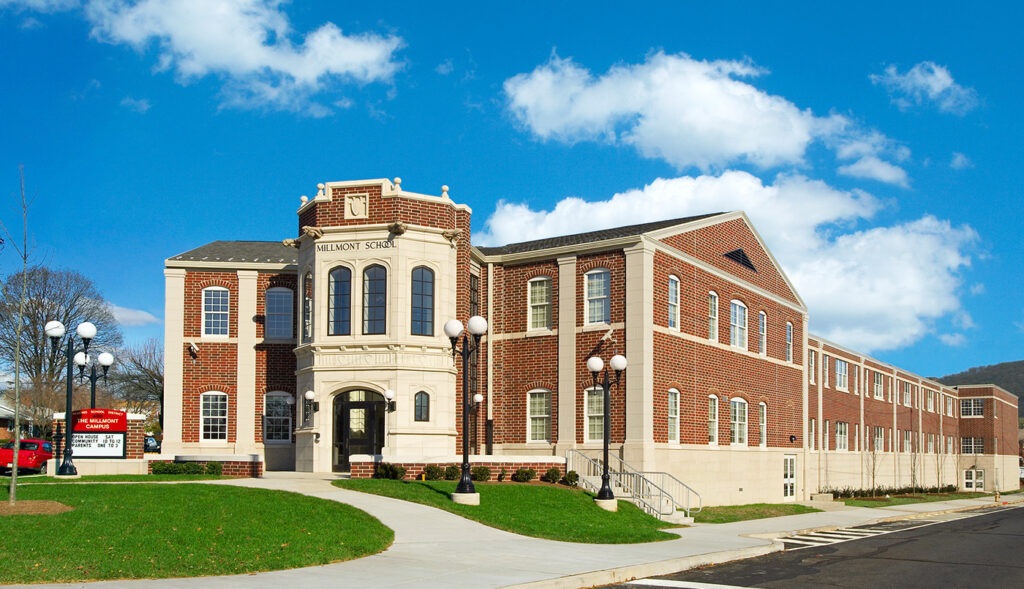
For many people, “modular” still brings to mind temporary classroom trailers behind a school building. That image has lingered long after the construction methods themselves changed.
Modern off-site school projects can include multistory classroom wings, secure entrances, collaborative learning spaces and specialized instructional areas. Once completed, most people would not know how the building was delivered unless they were involved in the project.
That point came up repeatedly during the MDASBO discussion.
The difference is usually in the process, not the building itself. Districts still maintain flexibility in layout, materials, finishes, and learning environment design.
In practice, many projects use a hybrid approach. Classroom wings may be delivered modularly while gymnasiums, cafeterias, or commons spaces are constructed traditionally. Every campus and project carries different constraints, which is why early planning matters so much.
Early coordination matters
Off-site construction works best when the right people are involved early.
Architects, manufacturers, construction teams, and district stakeholders need to align around delivery methods, procurement timing, coordination expectations, and schedule priorities before major decisions are locked in.
That early coordination is where many of the schedule advantages are gained or lost.
At Gilbert Architects, we’ve seen how off-site construction can help districts reduce disruption, improve predictability, and navigate complex construction conditions on occupied campuses. Like any delivery approach, off-site construction works best when it is evaluated thoughtfully and early.
If your district is evaluating upcoming facility needs, Gilbert Architects can help determine whether off-site construction makes sense for your project goals, schedule, and campus conditions.