
Appoquinimink Environmental Technologies Classroom
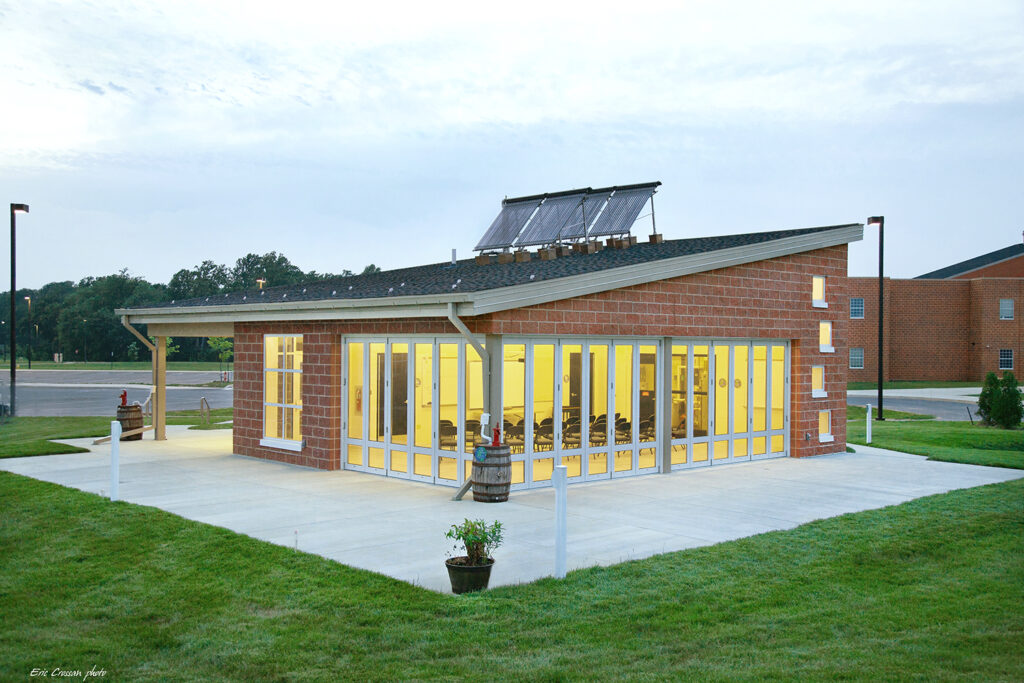
National model for green instruction
Located on the Bunker Hill Elementary School campus, this 1,000-square-foot facility stands as the nation’s first outdoor environmental technologies classroom dedicated to conservation and cutting-edge green systems.
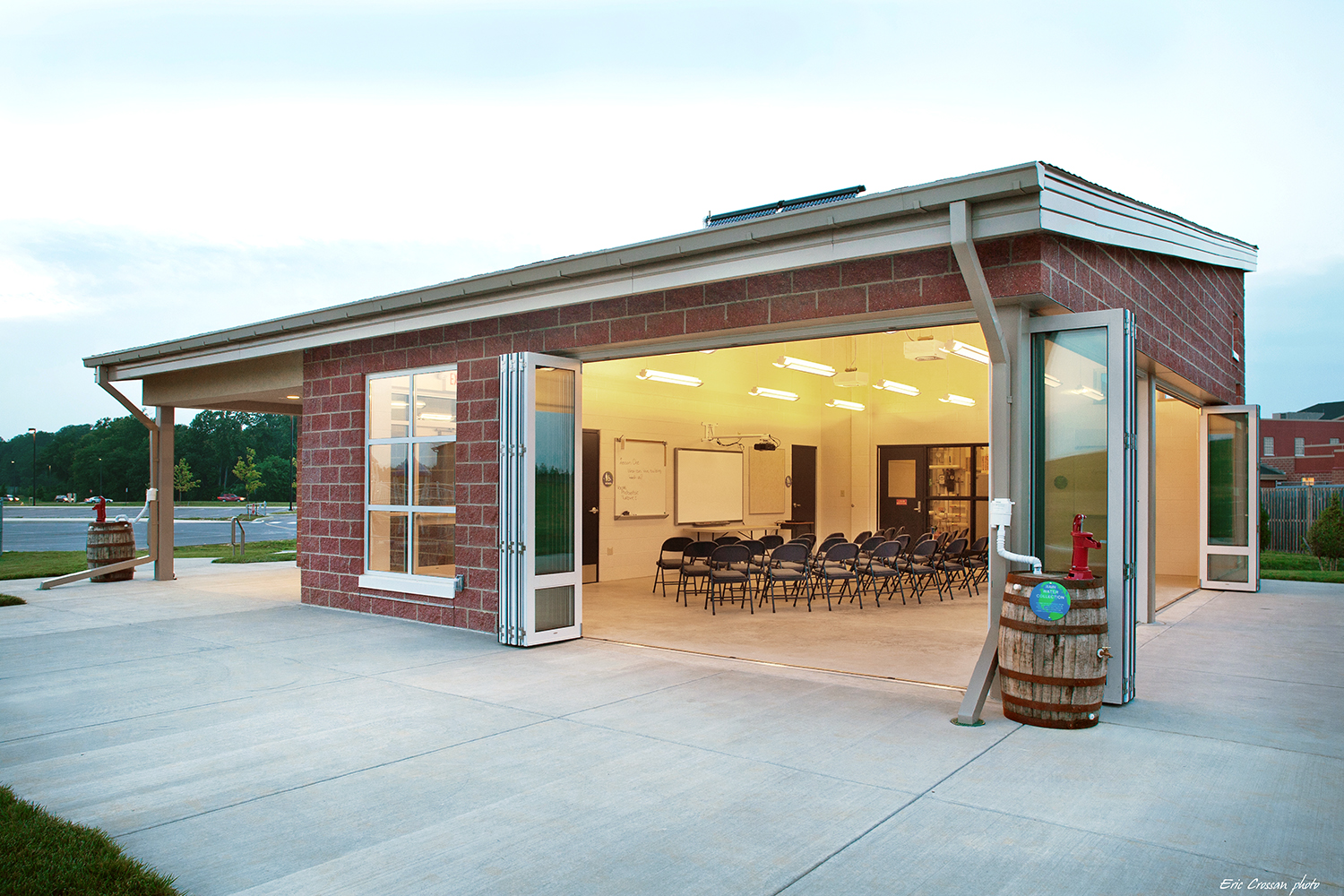
Designed to serve students across all grade levels (K–12), the building features two floor-to-ceiling folding glass partition walls that open directly to the surrounding landscape, blurring the line between indoor instruction and nature.
Hands-on sustainable systems
The building doubles as a living instructional tool, integrating active renewable systems that allow students to observe energy generation in real time:
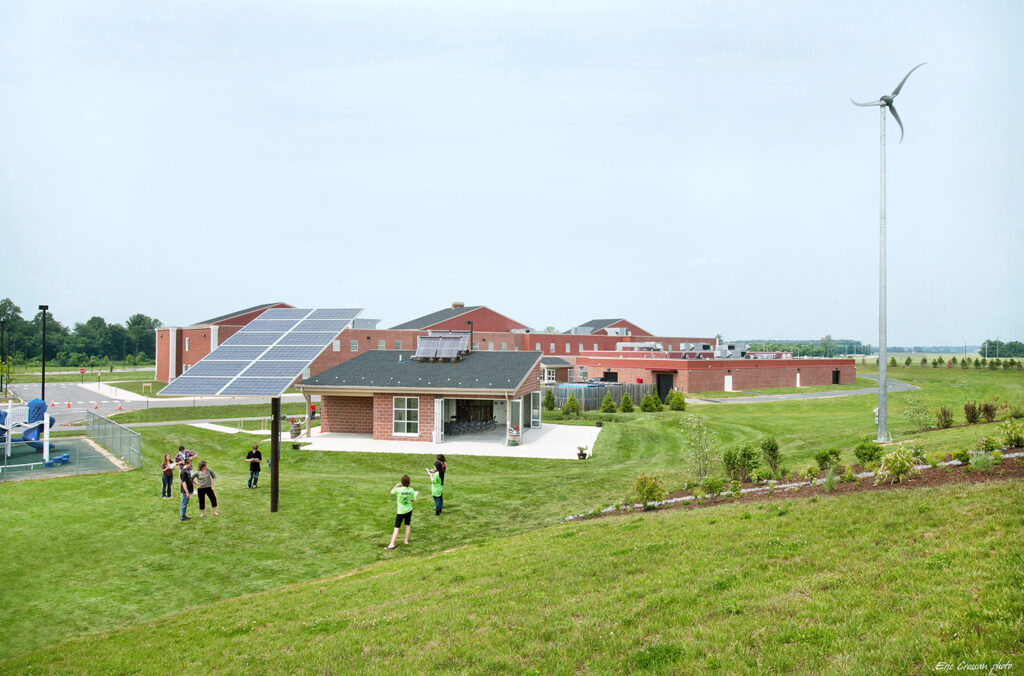
- Renewable generation: A 12-foot-diameter wind turbine and an outdoor solar tree harvest site energy, with on-site transformers demonstrating how green power converts into usable electricity.
- Visible infrastructure: Hydronic radiant floor heating features a built-in vision panel, allowing classes to view the internal piping mechanics below their feet.
- Conservation tools: Rainwater collection barrels feed an automated hydration system that irrigates an adjacent student demonstration garden packed with vegetables and herbs.
- Real-time monitoring: A touch-sensitive computer interface tracks live energy generation and building resource performance for interactive lessons.
District-wide STEM impact
While situated at an elementary school, the classroom functions as a regional STEM hub open to district-wide field trips, self-guided tours, and local community groups. Classes throughout the district can also access live energy generation data remotely via the internal network.
This setup allows teachers to incorporate real-time sustainability metrics into daily science, technology, engineering, and mathematics curricula without leaving their home classrooms.
As quoted by Senator Chris Coons (D-Del), “This is exactly the kind of place that science becomes relevant and exciting for young people who can learn how these promising technologies will improve our environment, improve our community, and help create the jobs of the future.”